Note from the Editor
Dear Reader,
Aside from the Lord’s Prayer - “Our Father,” the beatitudes is one of the core teachings of Jesus Christ that was provided to us, so we have a guide on what are valued in the Kingdom of God. “Beatitudes” come from a Latin word that means deep joy. These eight beatitudes where Jesus repeatedly started with “Blessed are…” are not rules or commands. Instead, these are declarations of blessings that come to those who truly follow Jesus and become His disciples. These come naturally in our heart, mind and actions if we become righteous, not on our own, but in God. We become hungry for spiritual freedom and seek for His salvation.
I see the beatitudes as the opposite of our world views. Before I personally knew Jesus, I relied totally on my own power, wealth, confidence, popularity, talent, skills, and intelligence aiming for my success as defined by social acceptance, high social ranking, job titles, and material possessions. When I started having a personal relationship with Jesus and trying every day to follow His footsteps, I surrendered my self-reliance and control. This is the only time I started feeling deep joy.
I acknowledge that Jesus died and resurrected for me and my sins. I make Jesus the guide of my life, where I practice daily obedience, intentional kindness, patience, active forgiveness and generosity through love and service for others. As a follower of Jesus, I try to do the right thing for the right reason, especially when nobody is watching.
I pray for your own personal relationship with Jesus so that you also choose to become His disciple and integrate the beatitudes in your daily life to truly feel the lasting state of happiness and peace. I hope this issue gives you an idea of how to put the beatitudes in a practical and modern application in your life.
In faith and fellowship,
Charissa Villamayor
Assistant Editor, Catholic Reflexions Magazine
Interview with A Catholic: Angelica Salgado
Each month, we have an intimate chat with a practicing Catholic. We discuss why they believe what they believe, the difference Christ has made in their lives, and any lessons learned from their faith journey. For this month, we feature ANGELICA SALGADO.
How do you integrate the Beatitudes into your daily life, and what challenges or rewards have you encountered in trying to live according to these teachings?
I try to bring the Beatitudes into my daily life because they remind me of how I want to live and who I strive to become. The one that grounds me most is “Blessed are the poor in spirit.” In a world that pushes self-reliance—where your own influence and accomplishments become your identity—it reminds me that I am nothing without God and my identity is in Him.
I’m independent, naturally driven and action-oriented, but I know every gift and opportunity ultimately comes from God. The challenge sometimes is knowing when to stop striving, let go of things beyond my control and seek Him for guidance and wisdom in every decision I make. That’s why I often pray Proverbs 3:5 — “Trust in the Lord with all your heart and lean not on your own understanding” — especially when I feel myself trying to control outcomes at work or in my personal life.
When I trust God instead of myself, the reward is supernatural peace, freedom, and humility. It helps me stay grounded while still pursuing ambition, excellence, and purpose, even in a competitive and bureacratic workplace and living in a fast‑paced city like NYC.
Can you share a bit about your upbringing and how your Catholic faith has played a role in your life?
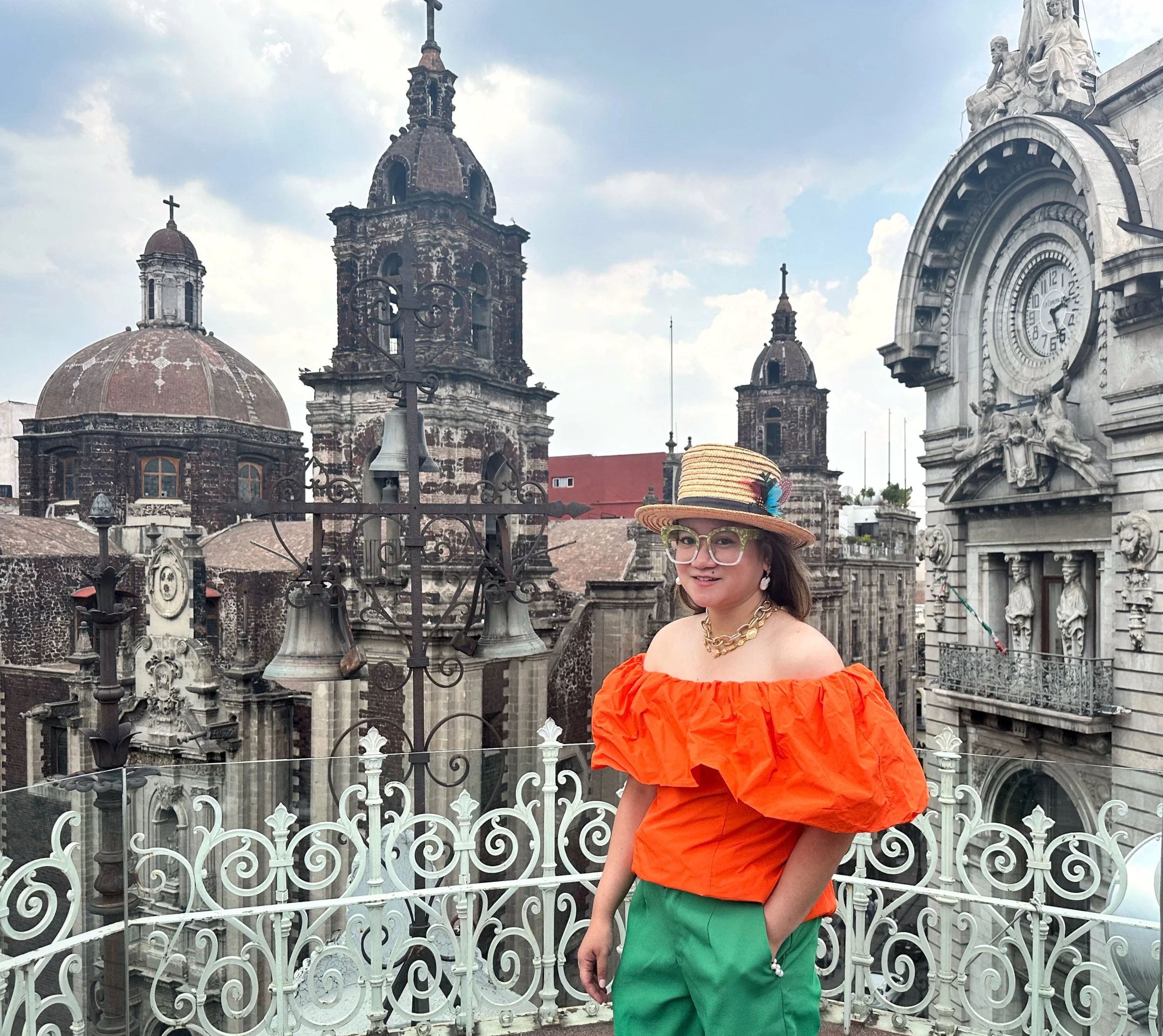
I grew up in Manila, Philippines, in a deeply Catholic home and my whole academic journey was shaped by Catholic education. Faith was part of my family life: Sunday masses, weekly novenas with my grandmother (devotion to Our Lady of Perpetual Help), praying the rosary, spending quiet time alone in prayer before the Blessed Sacrament, and watching my father and brother serve as lay ministers in our parish. I was blessed to be raised in an environment where faith wasn’t just taught, but practiced through compassion, generosity, and a genuine desire to help others. Those experiences shaped my love language of service and volunteering and formed the foundation of my relationship with God from a young age.
I believe my faith is the cornerstone of my personal and professional life, especially while living alone in New York City. Working in the United Nations has strengthened my appreciation for diversity, inclusivity, and treating everyone with empathy and dignity. I try to carry myself as an ambassador of God in small, everyday ways — through kindness, humility, excellence, and service to others.
I do my best to bring positivity into the workplace by making people smile, offering help, and choosing to see the good in others. Colleagues often tell me I’m “a light” who brings positivity wherever I go. I hold on to the idea of “letting God’s face shine on me,” hoping that whatever goodness people see reflects Him.
I believe my Catholic faith and values have grounded and guided me, giving me the strength to not just survive, but truly thrive while building a life and career in NYC — far from home, yet never really alone.
How does being a Catholic influence your everyday decision-making and problem-solving in your daily life?
Being a Catholic shapes my daily decision‑making because I offer every choice and decision — big or small — to God. I ask the Holy Spirit for guidance and wisdom before I act, and I hold on to my go‑to verse, James 1:5, which reminds me that if I lack wisdom, I can ask God and He will give it generously. Whether it’s a simple task at work or a major life decision, I’ve learned to seek His direction first.
I keep an ongoing conversation with God throughout the day. I start my morning with a prayer of gratitude and read my devotional. Before leaving my apartment, I ask for His blessing and offer my work, decisions, and the entire day to Him. On my bike ride to the office, I listen to worship music to center my heart. And throughout the day, I take small “praise pauses” — quick moments to thank God, reset, and remember that He’s with me.
What advice would you give to fellow Catholics striving to integrate their faith into their professional lives?
My advice to fellow Catholics is to remember that faith and professional life are not separate. Even in the most mundane tasks in the office — your daily duties and responsibilities — you can honor God. Whether you’re a staff assistant, a political affairs officer or a department head, your workplace can be a space where your faith quietly shines through the way you carry yourself.
We are called to live as God’s ambassadors, knowing that for some people — including those who may not believe — we may be the closest encounter they have with His love and goodness.
Do your work with excellence, offer it to God, and trust Him to bless it. Let your faith be reflected in your integrity, kindness, humility, and the way you treat others. You don’t need to preach — your life itself can be the testimony.
I think it’s important for us to remember that each of us has a God-given assignment in every season of life. Even if we are not yet in our ideal roles or “dream jobs,” God can use us exactly where we are. Nothing is wasted—He can redeem setbacks and unexpected career turns and use them as preparation for our calling. As Proverbs 16:3 reminds us, “Commit to the Lord whatever you do, and he will establish your plans.” When we offer our work for His greater glory, He can transform it, bless it, and make it truly meaningful.
Speaker Notes: Casting the Nets: Living Faith at Work – A Talk by John Dalla Costa
Each month, we summarize a talk previously presented to our members.
On October 30, 2025, ethicist, theologian, and author John Dalla Costa delivered an inspiring reflection entitled Casting the Nets: Living Faith at Work, exploring how Catholics can integrate faith into their professional lives amid today's increasingly complex and polarized world. Drawing on decades of experience in business ethics and theology, Dalla Costa challenged participants to see their work not merely as a profession but as a vocation through which Christ continues Christ's mission.
Dalla Costa began by observing that many Christians experience a divide between their faith and their work—a "church on Sunday, work on Monday" mentality. While organizations often promote ethics and values, faith itself is frequently left outside the workplace. He encouraged participants to unite their professional expertise with the Gospel, allowing prayer to shape their work while also bringing workplace challenges into prayer through discernment.
Reflecting on today's global landscape, Dalla Costa described the interconnected crises facing humanity—conflict, inequality, environmental degradation, declining trust in institutions, and rapid technological change. Echoing Pope Francis' description of a "polycrisis," he suggested that beneath these challenges lies a deeper spiritual crisis marked by fear, polarization, and a loss of hope. Christians, he said, are called not to despair but to become witnesses of hope by bringing the light of the Gospel into their daily work.
Drawing on Luke 5:1–11, the calling of the first disciples, Dalla Costa reflected on how Jesus met the fishermen while they were working rather than waiting for them in the synagogue. Likewise, Christ continues to encounter people amid their ordinary responsibilities, especially in moments of exhaustion, disappointment, and uncertainty. The disciples' time with Jesus in the boat also illustrates the importance of remaining close to Him through prayer, Scripture, and silence, allowing His presence to shape both our hearts and our service to others.
Dalla Costa then reflected on Jesus' invitation to "put out into the deep water." Although the experienced fishermen had caught nothing, they trusted Christ and cast their nets once more. He encouraged participants to bring that same trust into difficult professional situations, allowing faith—not simply expertise—to guide their decisions. The miraculous catch of fish also demonstrated that God's work is never accomplished alone. The disciples needed the help of others to bring in the overflowing nets, reminding us that Christian vocation is always lived in community and that even small groups of faithful people can inspire renewal within organizations and society.
Turning to the realities of today's workplace, Dalla Costa explained that every institution eventually risks losing sight of its founding mission. Renewal begins with what he called "moral entrepreneurs"—communities of people whose faith, integrity, and collaboration inspire change from within. He encouraged participants to cultivate communities rooted in prayer, mutual support, and the Eucharist, recognizing that lasting transformation often begins with faithful service in seemingly ordinary circumstances.
Addressing the challenges of working in diverse and interfaith environments such as the United Nations, Dalla Costa emphasized that authentic witness begins not with doctrine but with encounter. The Beatitudes—humility, mercy, justice, compassion, and peacemaking—express values that resonate across cultures and faith traditions. He also noted that throughout the Gospels, Jesus asked far more questions than He answered, inviting others into dialogue rather than imposing solutions. Christians today are likewise called to listen attentively, ask thoughtful questions, and seek genuine understanding as a way of living the Gospel in the workplace.
The talk concluded with a Q&A session on interfaith dialogue and the practical challenges of witnessing to the Catholic faith within international organizations. Dalla Costa encouraged participants to deepen their relationship with Christ through prayer and trust that even small acts of faithful service can help renew workplaces, communities, and society with hope.
The full talk is available here.
Workplace Tips: Top Tips to Stay Organized at Work
Each month, we offer advice and tips for being effective in our workplaces. Drawing from global best practices and personal experiences, we share insights for your use.

Work Organization & Productivity Tips
Organize Your Workspace – Declutter, color-code tasks, and ensure ergonomic comfort.
Structure Your Workday – Follow a routine, plan ahead, and tackle key tasks first.
Manage Time Effectively – Use time blocking, delegate tasks, and work during peak hours.
Stay Digitally Organized – Manage emails, use project management tools, and leverage automation.
Optimize Remote Work – Set boundaries, create a dedicated workspace, and minimize distractions.
Boost Efficiency – Prioritize tasks, take breaks, and maintain strong communication.
Original article is available here.
Spiritual Life Tips: How Do I Discern My Vocation
Each month, we offer practical advice and tips related to our Catholic faith and spirituality.
Fr. Mike Schmitz explains that discerning one’s vocation begins with trusting that God knows us better than we know ourselves and wants what will bring us true happiness. He provides three key questions to ask daily to help align our lives with God’s will.
First, “Am I in a state of grace?” Staying free from serious sin and regularly going to confession keeps us spiritually connected to God, making it easier to hear His voice. If we are distant from Him, discerning His plan becomes much harder.
Second, “Am I doing my daily duty?” Fulfilling our responsibilities—whether as a student, spouse, parent, or worker—is essential. Faithfulness in small tasks prepares us to say "yes" when God calls us to greater things. If we neglect our current duties, we are less likely to recognize and follow God’s larger plan for us.
Third, “Did I pray today?” True discernment requires an active relationship with God through prayer, Scripture, and quiet reflection. It’s not enough to wonder what God wants for our lives; we must take time to ask Him and listen for His response.
Fr. Mike assures that by consistently practicing these three habits, we will discover our vocation at the right time. God will never reveal His plan too early or too late, so we must trust in His perfect timing and remain faithful in our daily walk with Him.
Original article is available here.
“The Beatitudes are perfect because they bring us to the highest good: God Himself. They teach us not to seek happiness in things that pass away, but in what is eternal. The poor in spirit seek God above all, the meek trust in His strength, the merciful reflect His love, and the pure in heart see Him everywhere. If you desire happiness, do not look to the world—look to Christ, who is the fulfillment of every Beatitude.”
For inquiries, or potential contributions to the magazine, please contact unitednationscatholicclub@outlook.com